01 Capture
Every meaningful change, recorded.
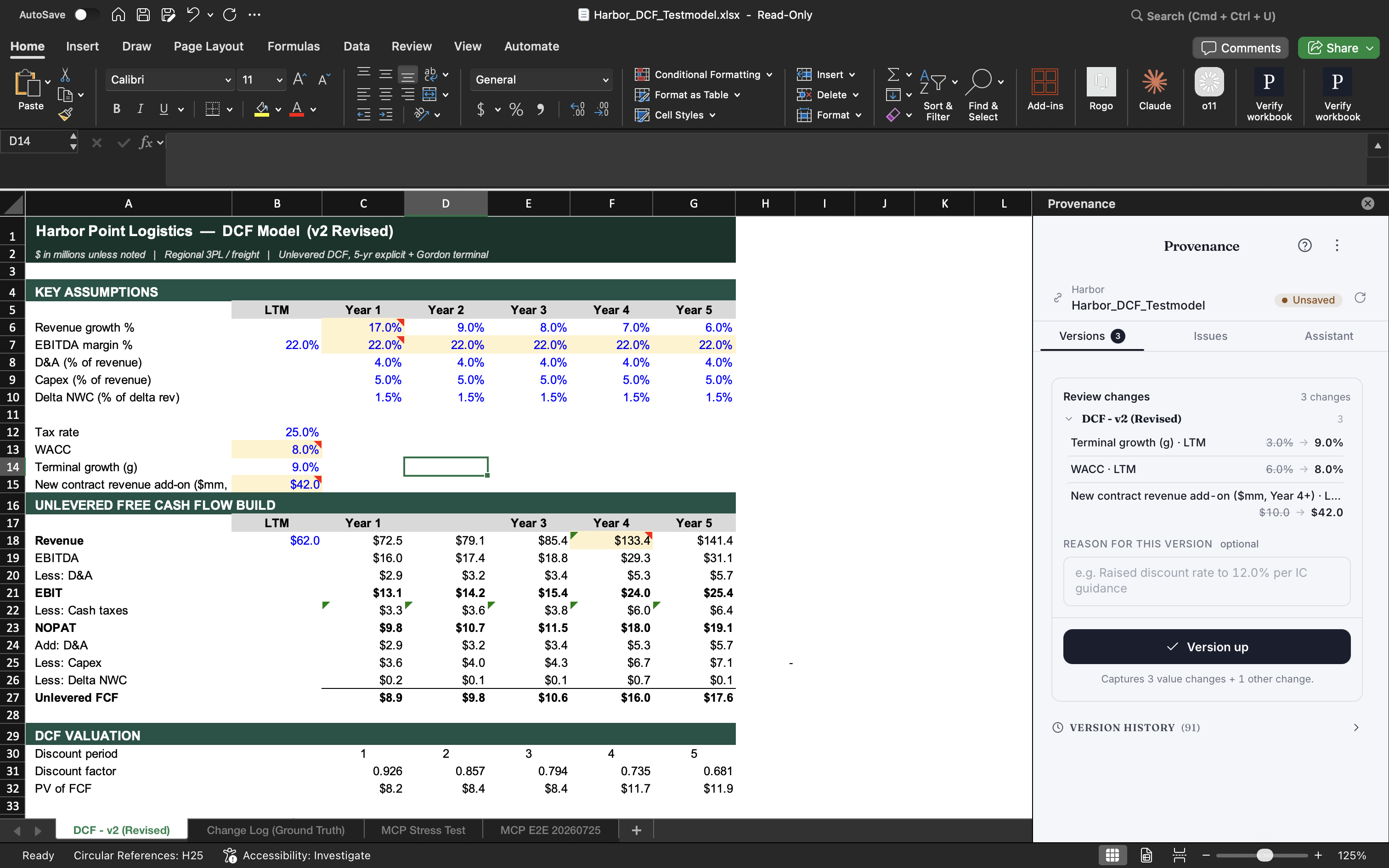
Provenance lives inside Excel and PowerPoint. Each version keeps the author, the reason, and the exact state of the file.
Review models in 15 minutes instead of two hours. Provenance is version control for your Excel models: every version saved, every change explained with its impact, and every number linked to its source.
Backed by the best






Provenance turns model review from hours of cell-by-cell checking into a five-minute review of only what matters. Every version in one place, every change checked, and a review of only the short list that needs a decision.
As mentioned in
Provenance has been covered by Fortune Turkey, Habertürk, Capital, Para Dergi, Ekonomim, Webrazzi, and others.
The product
01 Capture
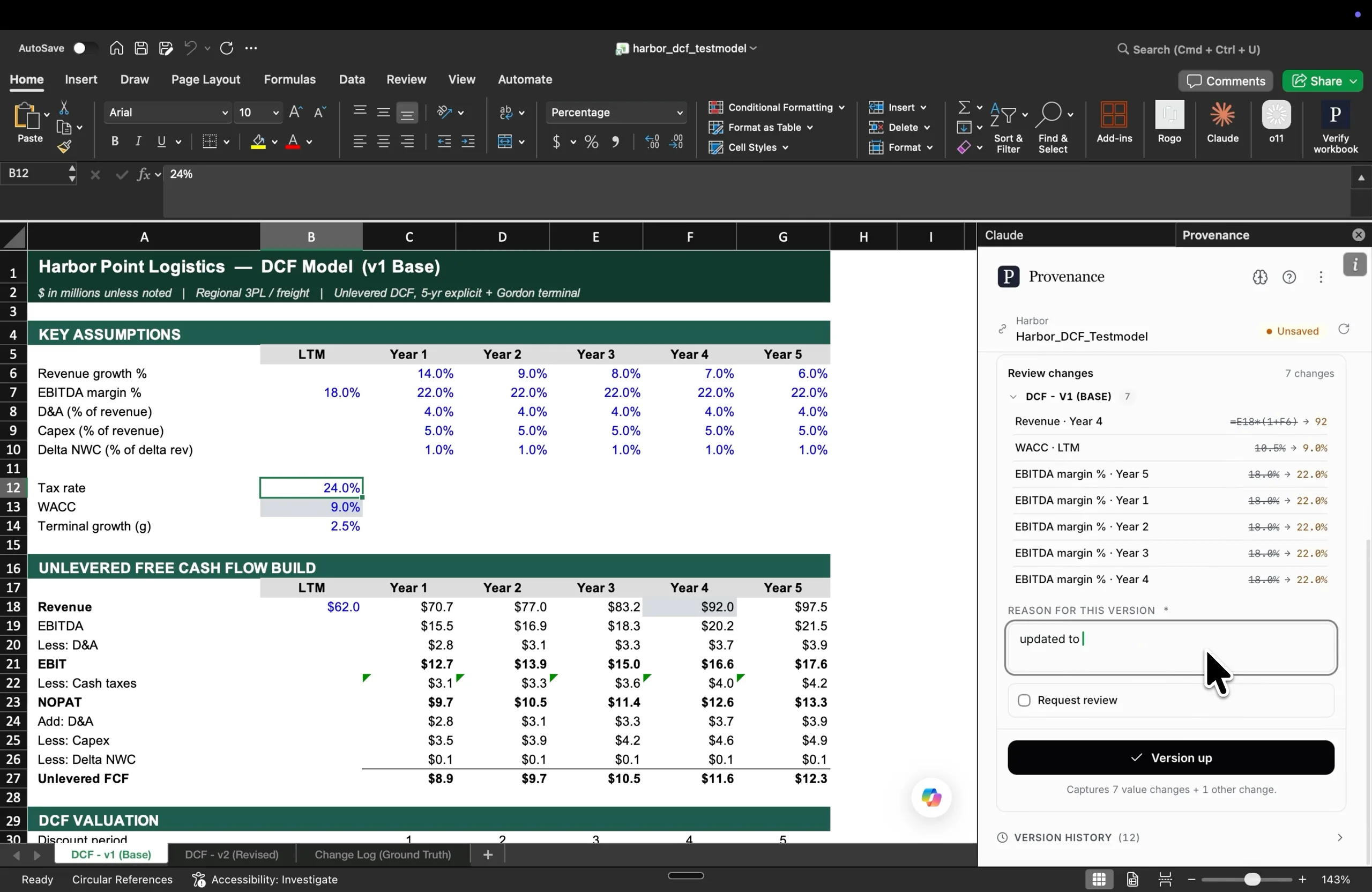
Provenance lives inside Excel and PowerPoint. Each version keeps the author, the reason, and the exact state of the file.
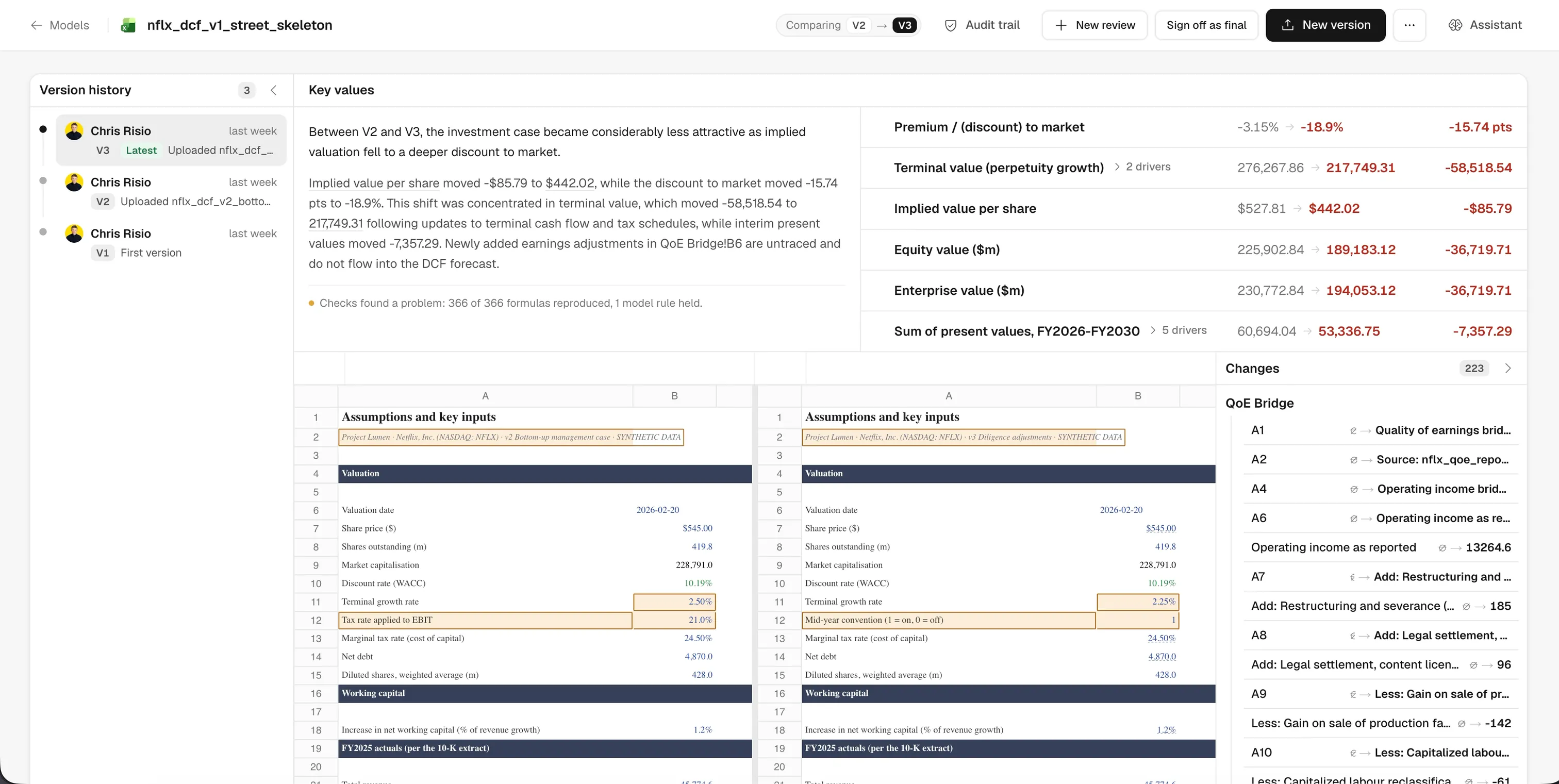
02 Understand
The redline traces a changed driver through valuation, cash flow, and every output it touches.
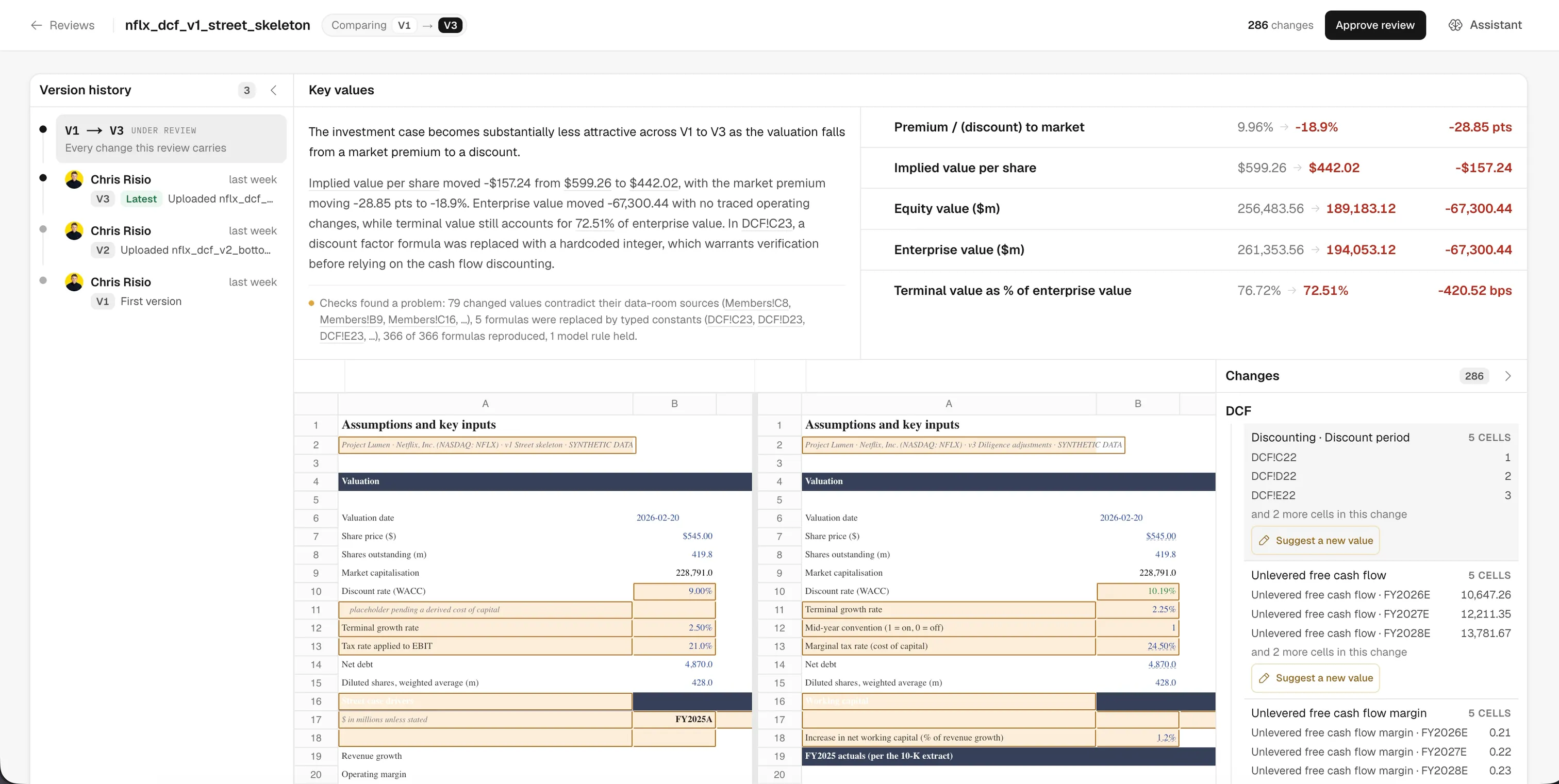
03 Compare
Base and current sit side by side with every changed assumption called out.
The attribution engine
We make every cell traceable, and every source traces back, down to the page. When a match does not line up, the engine tells you instead of guessing.
The reconciliation is arithmetic, not judgement. Whether a figure agrees with the document behind it is settled by rule, before anyone asks the AI anything, so the disagreement is already on the screen rather than waiting to be noticed.
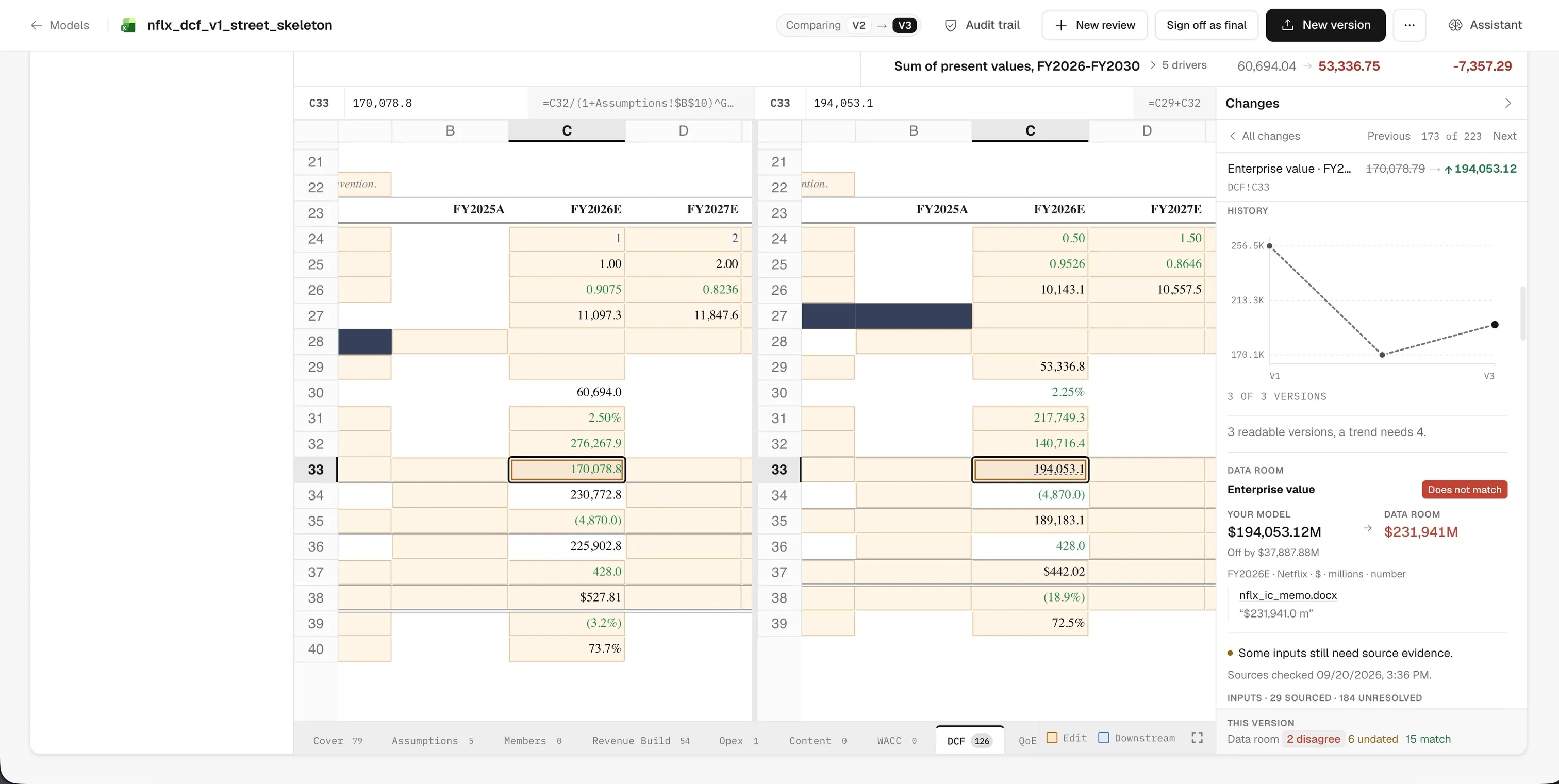
The attribution flow, captured from the product.
The engine reads the data room into figures, then holds each one against the line it came from. Open a number and the source opens with it, at the page and the sentence that carries it.
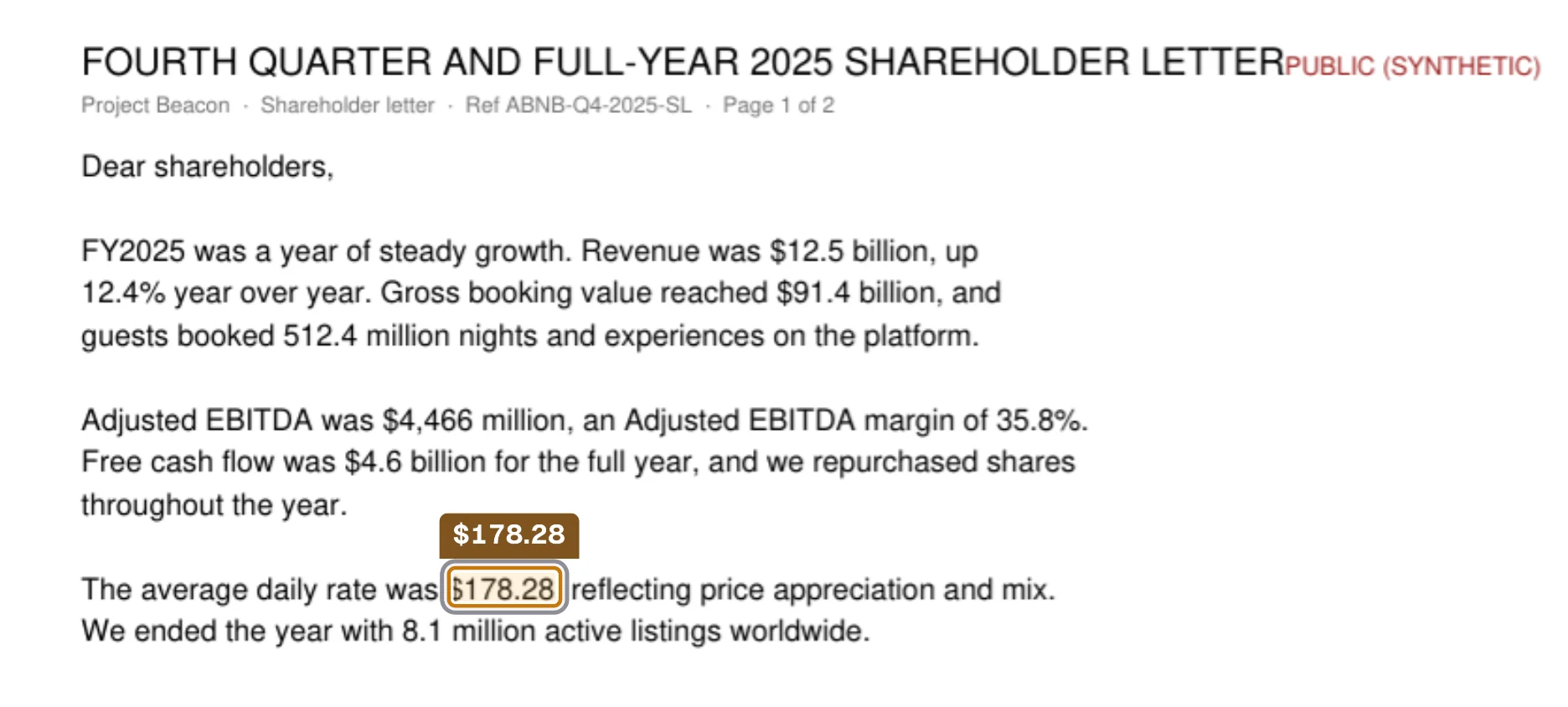
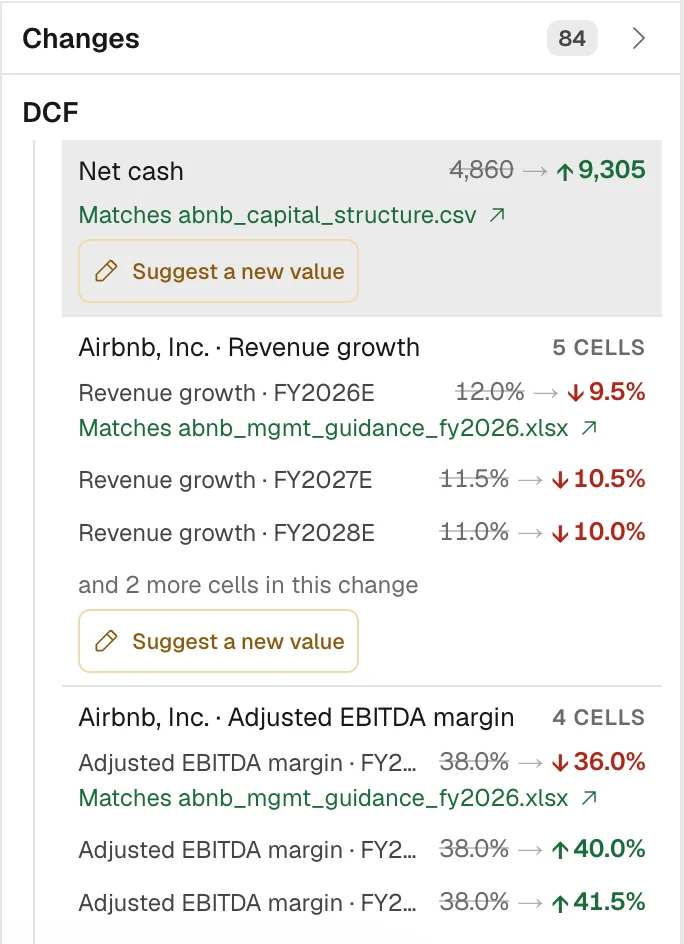
Every change carries its own verdict and the file that settles it.
Excel add-in
Provenance sits beside the model. It flags what looks wrong, shows exactly what changed since the last version, and saves that version with the reason attached — without leaving Excel.
Decks and CIMs
Numbers leave the building in a deck, not in a workbook, and the deck is rebuilt far more often than the model behind it. Provenance versions PowerPoint the same way it versions Excel.
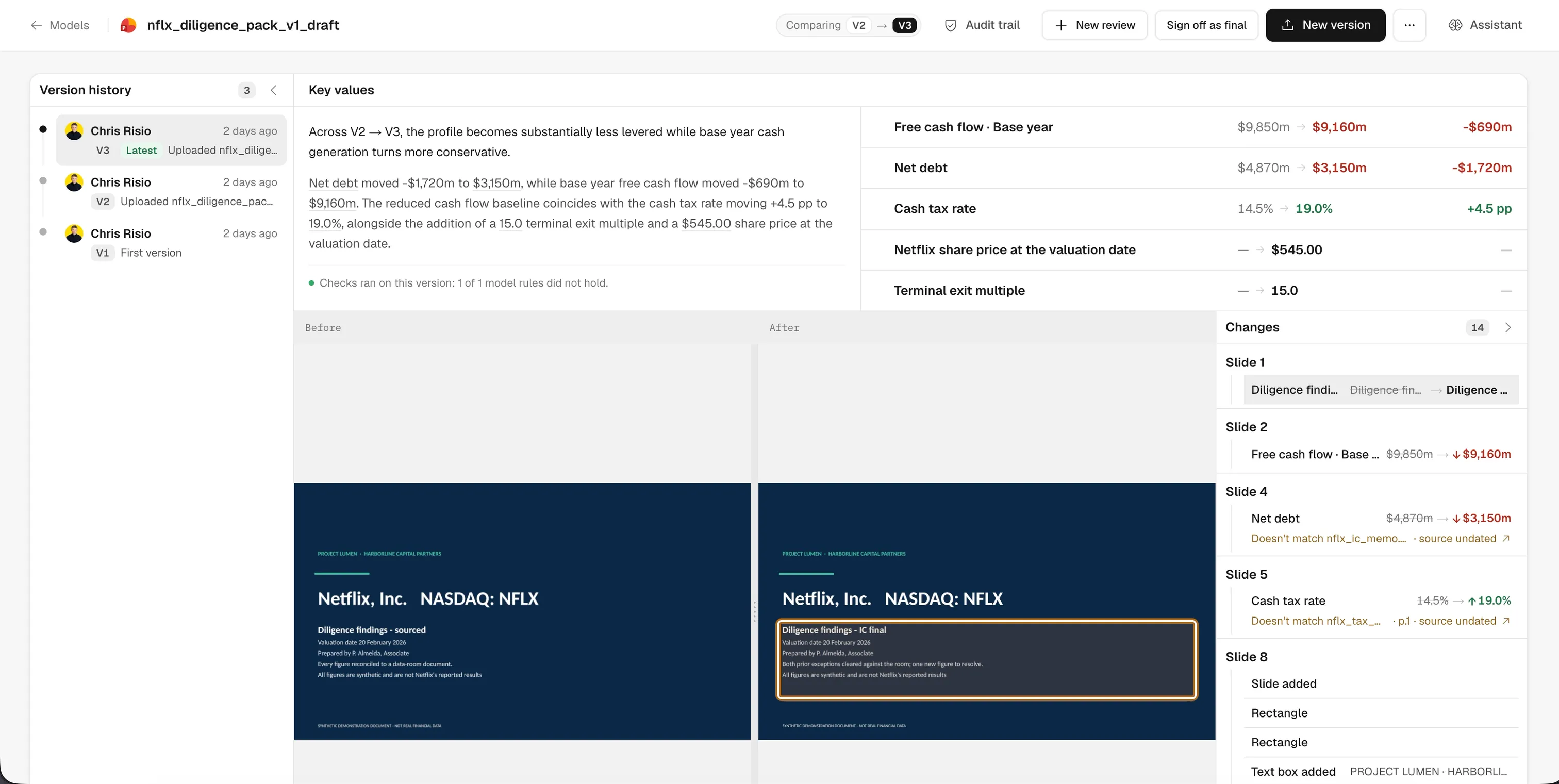
Text, numbers, formatting, and the data behind every chart. See exactly what moved between the draft that went out on Tuesday and the one sitting in front of the committee.
Every thread, edit, and resolution is kept against the slide it belongs to, so a reviewer’s mark-up survives the next rebuild instead of dying in an email chain.
Each number on a slide is verified against the source documents behind it. A figure that no longer matches what the data room says is flagged before the deck leaves the building.
The Assistant
Ask with the frontier model of your choice: GPT-6 Astra, Claude Opus 5.5, Grok 4.6, and Gemini 3.8 Flash, each grounded in your models, documents, and deal history. Every answer links back to the exact version it came from.
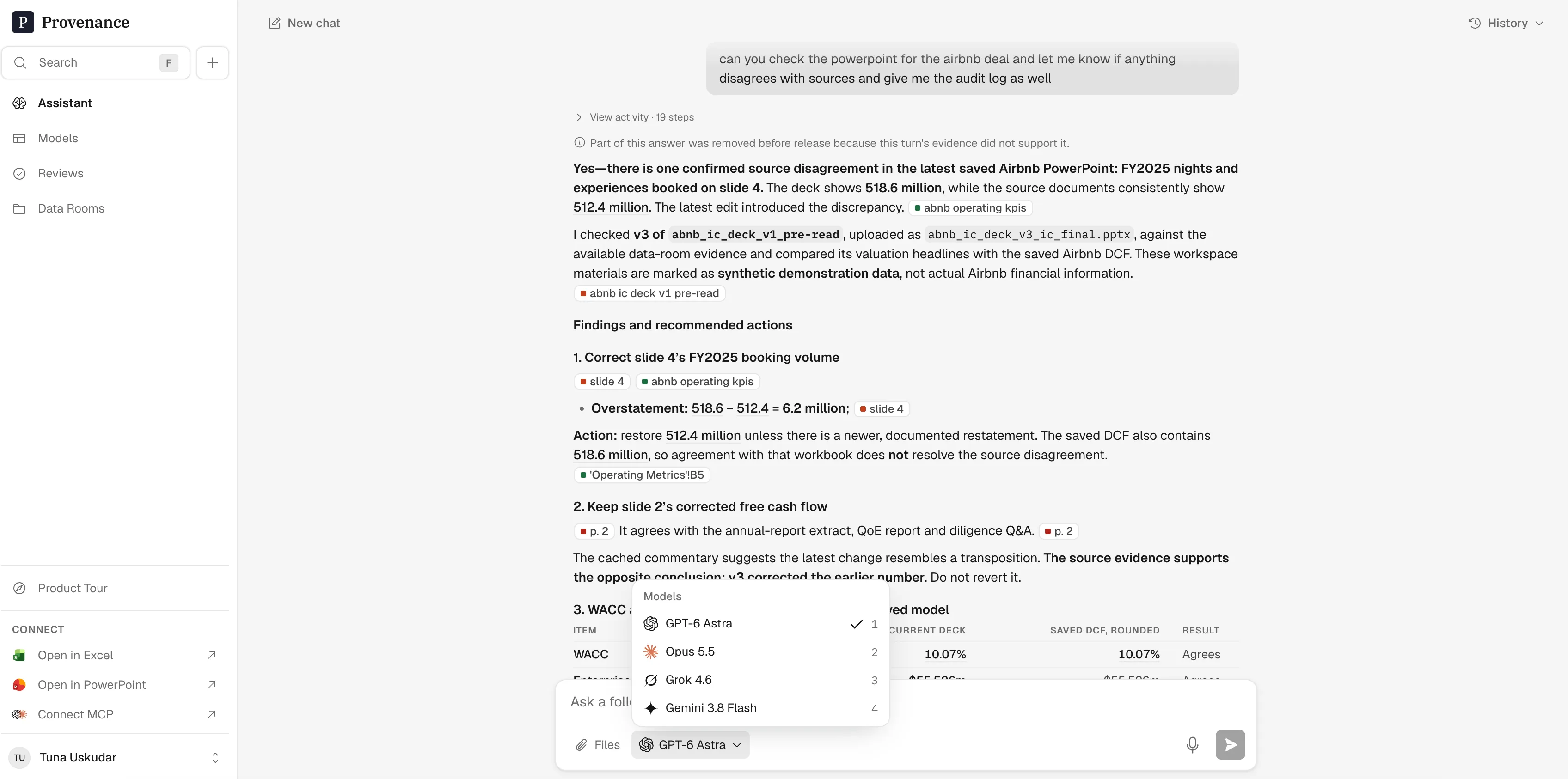
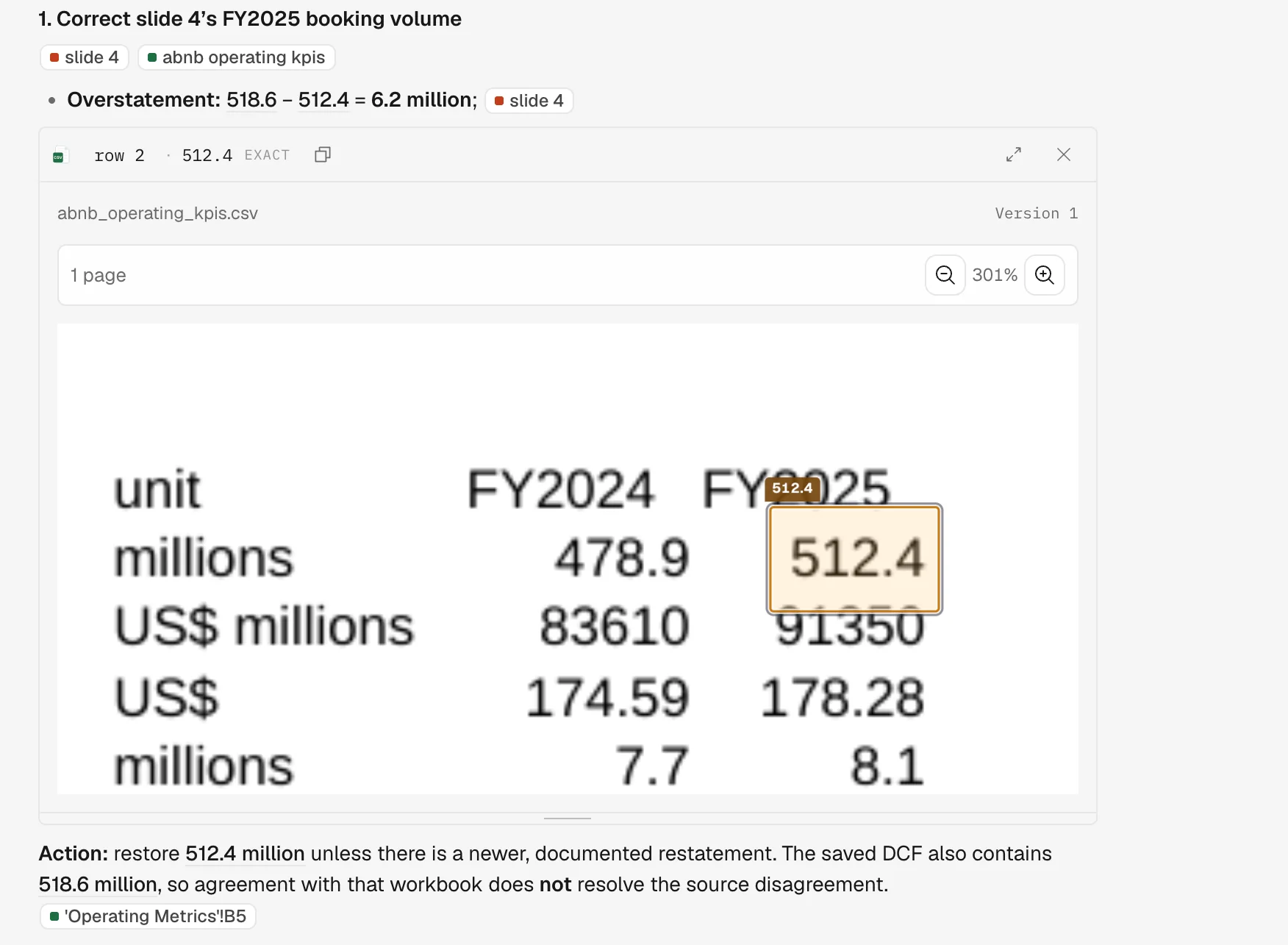
Not a document name, not a page guess. Open any number in an answer and the source file opens with it, scrolled to the exact cell and marked as an exact match. The citation is resolved by rule, so the same question returns the same cell every time.
Provenance makes every financial decision searchable, traceable, and reviewable.
Find the number, open the document behind it, see who signed off.
What it costs today
Nobody budgets for chasing versions and tying out figures, but it is paid for every week. Here is what that looks like on a mid-sized team.
3,456
Hours a year
A twelve-person deal team, finding the right version, checking what changed, and working out where a number came from.
$327k
Cost of that time
What those hours cost at a fully loaded $250,000 a head, on the long weeks deal teams actually work.
5.4
Hours back, per person, weekly
At a tenfold reduction on the work this measures. Move that assumption yourself and the number moves with it.
Arithmetic on typical inputs, not a measured result from a customer.
Security
Encrypted in transit and at rest, least-privilege access with organization and project isolation, and a tamper-evident trail of every change and review decision.
“Financial models move billions, yet they live in files emailed back and forth. We built Provenance to bring structure and accountability to the most important spreadsheets in the world.”
Tuna Uskudar
Founder & CEO, Provenance