Private Equity
An IC memo where every figure traces to the room.
Lean deal teams build a model for every serious opportunity, revise it under bid deadlines and take it to the investment committee. Provenance keeps each version, checks it against the data room, and leaves a record of what changed and why.
The problem
On a private deal, the room is the only ground truth.
A private company does not appear in a market-data terminal, so its numbers exist only in the documents the seller provided.
Underwriting runs on the QoE, the management accounts and, in real estate, the rent rolls and T-12s. The model is only as good as its ties to those pages, and on a bid timeline nobody re-checks them by hand.

Where it fits
Three places it changes the work.
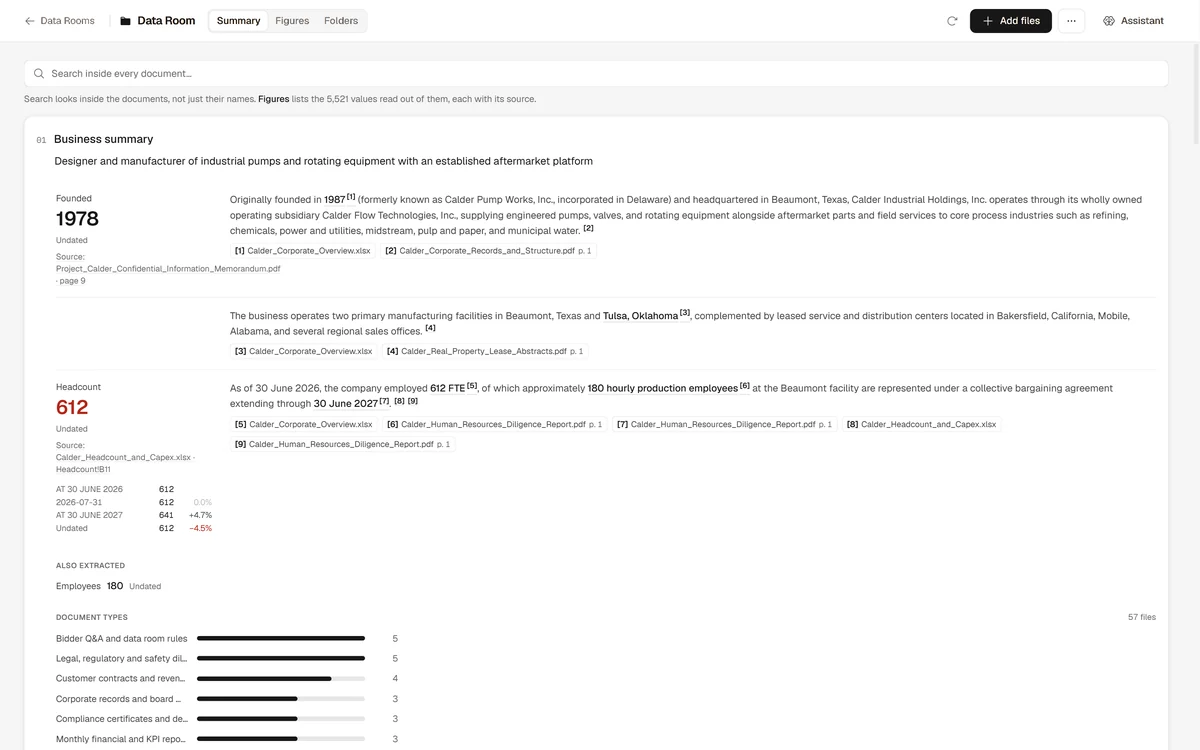
01 Underwriting against the room
The QoE, the rent roll and the T-12, read once.
Each figure in the underwrite is tied to the page it came from.
The committee sees the source and not the assertion. A figure the room does not support is marked before the memo is drafted.
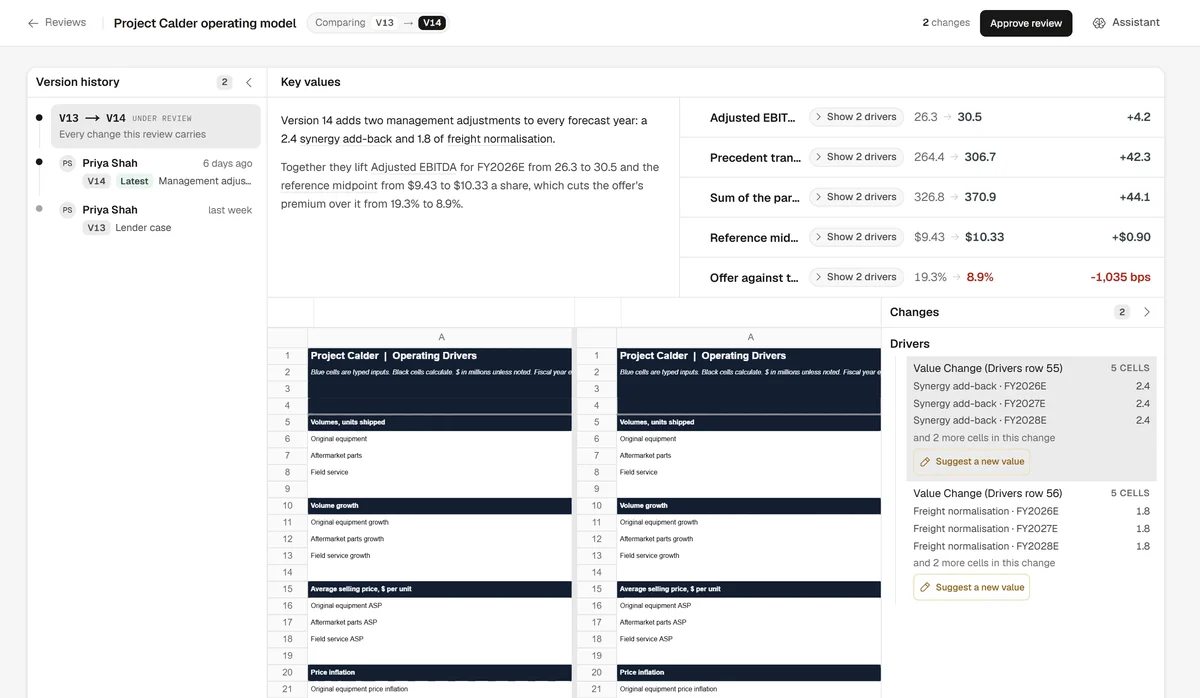
02 Versions under a deadline
Sixteen versions of one model. Which one went to IC?
Every version is saved with its author and its reason.
The night before the deadline nobody asks which file is final, and the committee can see what changed since the last time it saw the deal.
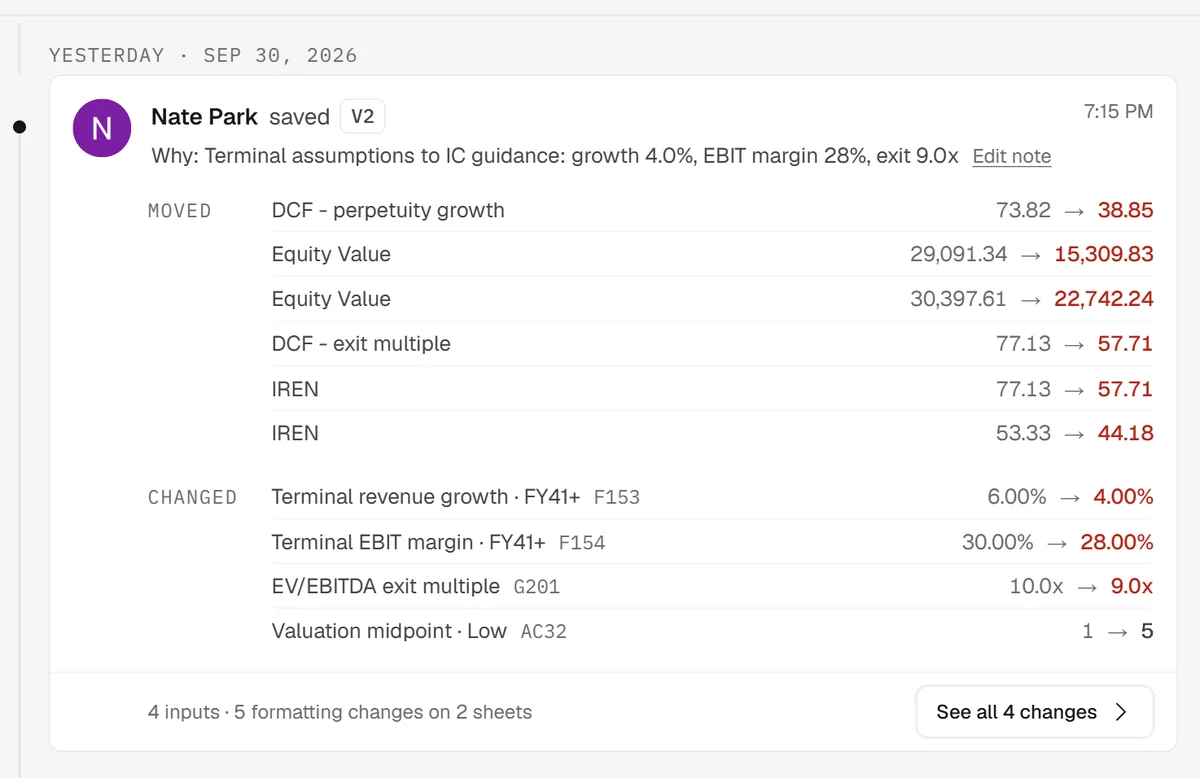
03 After close
The record you hand an LP or an auditor.
Months later, when someone asks where a figure came from, the version, the source page and the person who approved it are already on file.
Export the audit trail for that version as a PDF and hand it over.
Run it on your next live deal.
Thirty days, with two success metrics agreed in writing before day one.