Investment Banking
Sign off on the book before the client sees it.
On a sell-side process the model, the CIM and the management presentation are built by analysts and associates and signed by a VP and an MD who did not build them. Provenance checks each version against the last one and against the data room before it reaches them.
The problem
You sign off on work you did not build.
Every deliverable goes through five rounds or more, and the checking lands on the most expensive people on the deal.
Each round arrives as a new file with its reasons in an email thread. The VP compares it against memory, the MD reads it the night before it goes out, and one wrong figure on a cover page is enough to stop an overnight print run.

Where it fits
Three places it changes the work.
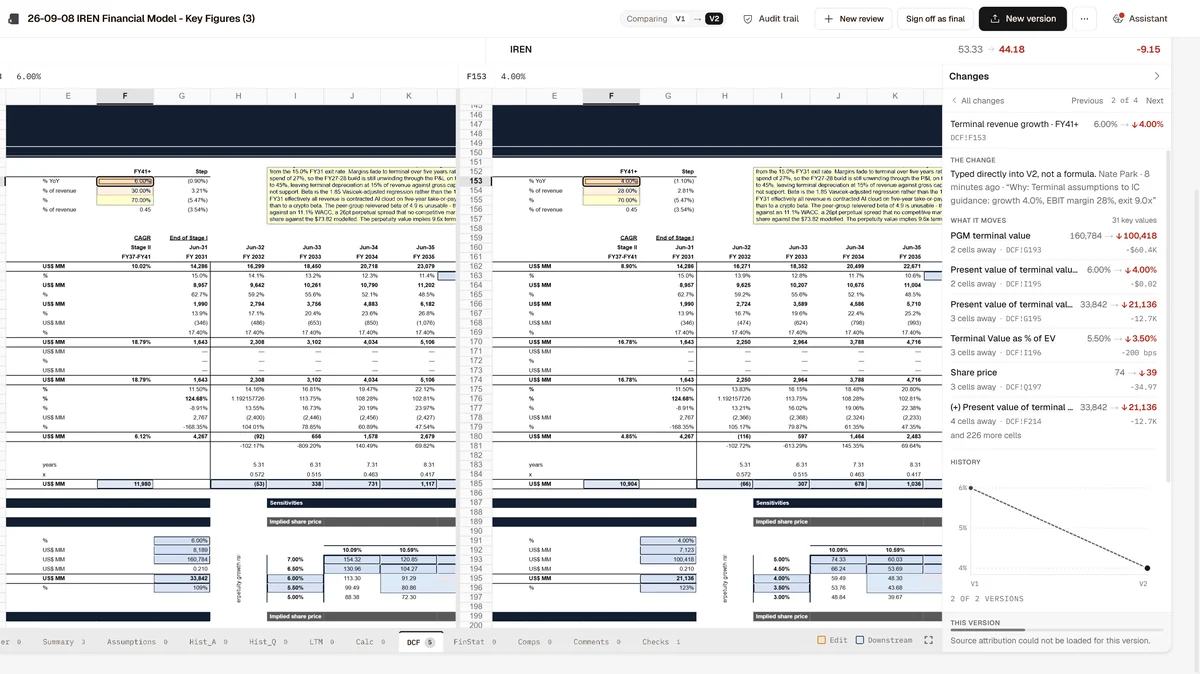
01 Working through comments
What changed since I last reviewed this.
Each new version opens on the inputs that moved and the outputs they moved.
Comments are checked against the change instead of against the whole file. Comments that contradict the last version usually come from reviewing the file rather than the change.
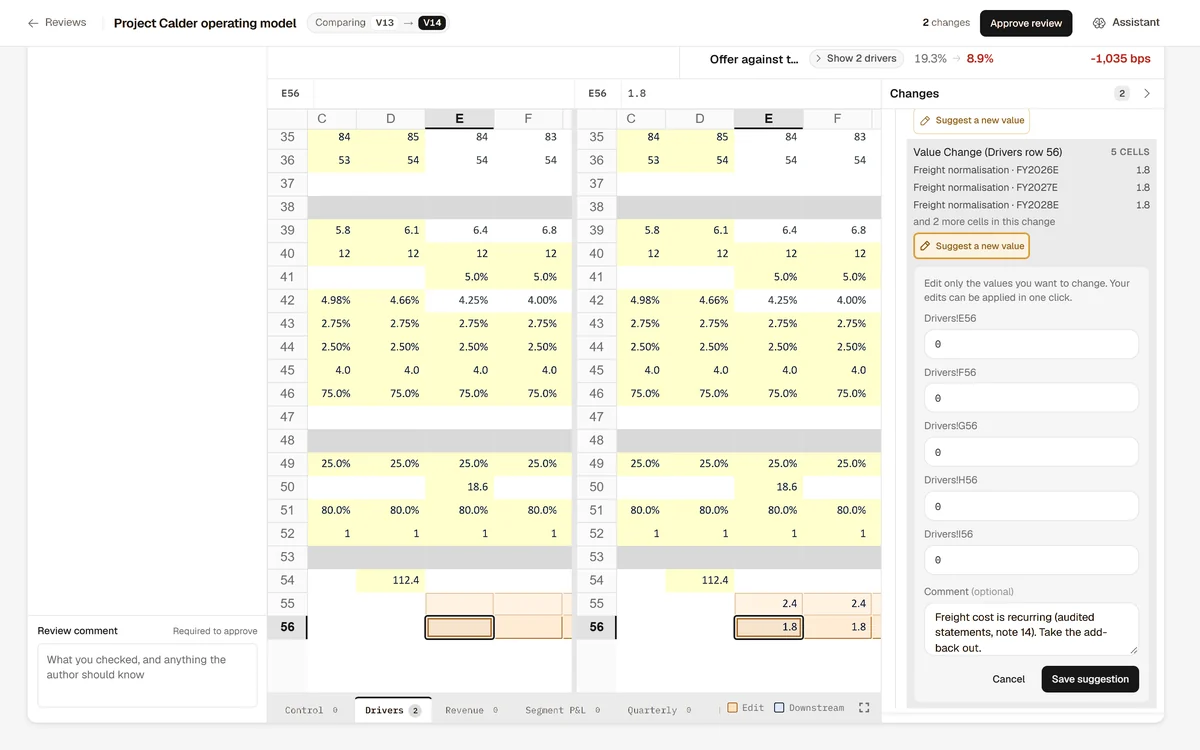
02 The book, draft against draft
The comments you made against the changes they made.
Each draft of the CIM and the management presentation is compared with the last one.
The VP checks what was actually changed instead of rereading the book.
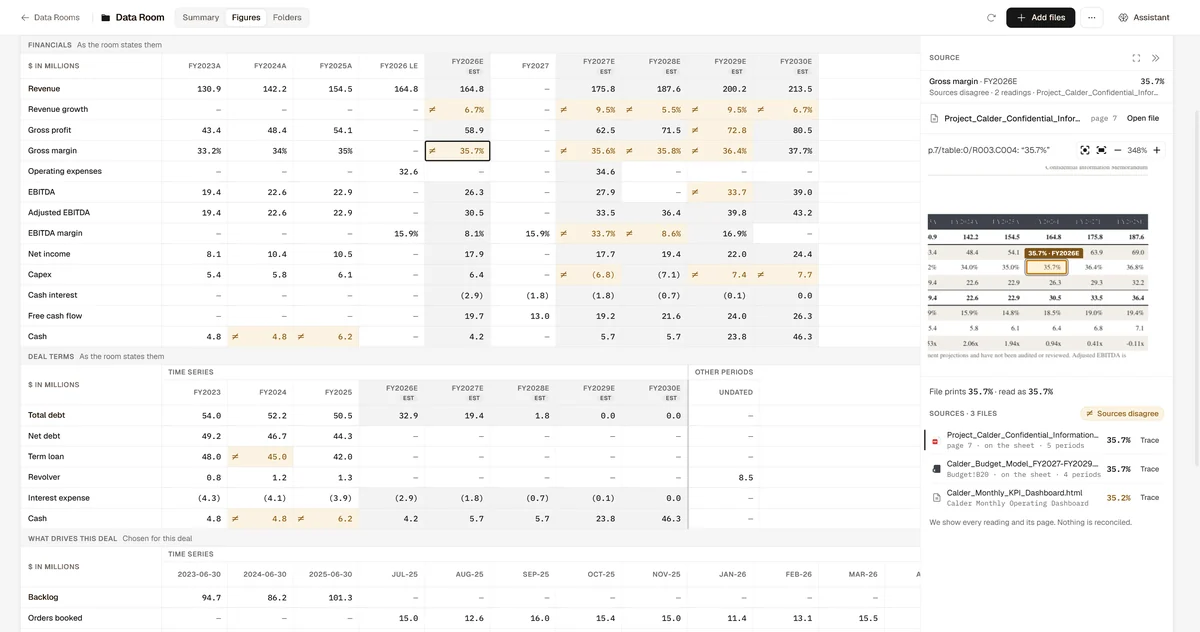
03 First drafts from AI
The first draft came from AI. Which figures still tie?
When analysts draft with Copilot or Claude in Excel, Provenance shows which cells changed and whether each one still ties to its source.
Every AI tool a bank rolls out adds changes someone has to review.
Run it on your next live deal.
Thirty days, with two success metrics agreed in writing before day one.